
Tired of Denture Adhesive? Exploring More Stable Options
Dental Implants


If denture adhesive has become part of the daily routine, that’s not unusual.
For many denture wearers, it’s simply one of the ways they maintain comfort and confidence throughout the day. Dentures work very well for many patients, especially when they’re well-made and properly fitted.
At the same time, it’s also common to reach a point where questions start to come up around stability and ease. Maybe adhesive is being used more often than it used to be. Maybe there’s a bit more movement than expected. Or maybe there’s simply some curiosity about whether a different kind of stability is possible.
All of that is a normal place to be.
This guide walks through why denture adhesive becomes more common over time, and what options exist if you’d like to understand what else may be available.
Why Denture Adhesive Becomes a Daily Habit
Dentures are designed to fit the shape of the mouth at a specific point in time. But the mouth does not stay the same.
After teeth are removed, the jawbone and gums gradually reshape. This is a natural process, and it happens whether someone wears dentures or not. Over time, those changes can affect how a denture sits.
At first, the change is subtle. A small shift here or there. Then a gradual increase in movement. Denture adhesive can help compensate for that and restore a sense of stability.
For many patients, that works well.
But it is also the point where some begin to wonder if stability can be improved more directly, rather than managed day to day.
Is It Normal to Rely on Adhesive Long-Term?
Some people use denture adhesive occasionally without issue. If it becomes something you rely on daily just to feel stable, it may be worth understanding why.
A well-fitting denture can often feel secure on its own. If that is not your experience, it does not mean something is wrong. It may simply mean your mouth has changed, and your current fit has not kept up with it.
That is usually where the next stage of the conversation begins.
Starting With the Simplest Option: Fit
Before looking at anything new, the first step is usually to revisit the fit of the current denture.
As the gums and bone change, dentures can be relined or adjusted to better match the current shape of the mouth. This can improve comfort and reduce movement. This option may help if:
- Your dentures used to fit well but now feel loose
- You’ve noticed changes gradually over time
- You want a lower-commitment way to improve comfort
While relines can improve fit, they may not fully eliminate movement, especially for lower dentures, which tend to be more challenging due to tongue and muscle movement. Over time, changes in your gums and jawbone can create small gaps between your denture and your mouth. A reline or adjustment can help improve the fit.
When a New Denture May Help
There are situations where the changes in the mouth are more significant, and adjustments alone do not fully restore the fit. In those cases, a new denture designed around your current anatomy can improve both comfort and function.
Advancements in materials and fabrication have made modern dentures more precise than in the past, which can make a noticeable difference for many patients. A new denture may help:
- Improve overall comfort
- Reduce reliance on adhesive
- Restore a more natural feel and appearance
Even with a well-made denture, some movement can still occur, especially when eating or speaking. For some people that is manageable. For others, it leads to exploring options that provide more stability.
Adding Stability With Implants
Dental implants offer a way to increase stability by providing an anchor within the jaw. Instead of the denture relying only on the gums, it connects to implants placed in the bone. This can reduce movement and create a more secure feel during everyday activities like eating and speaking.
These are often referred to as implant-supported dentures, or snap-in dentures. They remain removable, but they are supported in a different way. They’re often explored by people who:
- Are tired of denture movement
- Want more stability without a fully fixed solution
- Prefer something that feels secure but still removable
For patients who are generally satisfied with their dentures but would prefer less reliance on adhesive, this is often the first option explored. This can help improve stability while eating and speaking, reduce or eliminate the need for adhesive and increase overall comfort and confidence.
For Patients Considering a More Fixed Option
Some patients look for a solution that does not involve any day-to-day movement and maximum stability, which is where fixed dentures come in.
Fixed implant solutions are designed with that goal in mind. They are attached to implants and are not removed daily. They offer a different level of stability and function, but they also involve different planning considerations and are not necessary for everyone.
Potential benefits may include:
- No movement while eating or speaking
- No need for adhesive
- A more permanent-feeling solution
Fixed dentures are typically supported by multiple implants and require a full assessment to determine if they’re suitable.
As with all options, this is something discussed during a free consultation, not decided upfront.
How Do You Know Which Option Is Right for You?
There isn’t one “best” solution for everyone. The right option depends on factors like:
- Your current oral health
- Whether you still have natural teeth
- Your comfort preferences
- Your budget and coverage options
It can be helpful to think of denture solutions as a range rather than a single decision. At one end, traditional dentures continue to work well for many patients. From there, adjustments and new dentures can help maintain fit over time. And beyond that, implants can be introduced to increase stability, either with removable or fixed designs.
Each step builds on the previous one. There’s no requirement to move from one to the next, only the option to do so if it aligns with what the patient is looking for.
That’s why Saberton Denture & Implant’s approach starts with education, not decisions.
Patients begin with a free initial discussion, where they can share their experience with dentures, ask questions about adhesive, fit, and alternatives. From there, a denturist can guide next steps based on what matters most to you.
What About Cost and Coverage?
Cost is often one of the biggest concerns, and understandably so.
It’s helpful to separate two things here, because they’re often grouped together but treated differently when it comes to coverage:
Denture-related treatments, including partial dentures, full dentures and, in some cases, overdentures (dentures supported by implants), may be eligible for coverage under the Canadian Dental Care Plan (CDCP), depending on your individual situation and pre-authorization.
Dental implants themselves, however, are generally not covered under CDCP. This includes the surgical placement completed by the implant surgeon.
What this means in practice is that some parts of treatment may be covered, while others are not.
For patients exploring options beyond traditional dentures, cost doesn’t always need to be approached all at once. At Saberton Denture & Implant, flexible payment options are available to help spread treatment costs over time, depending on the plan and the patient’s needs.
The goal is to make sure patients can look at their options clearly, without having to make decisions based on assumptions or incomplete information.
Because every case is different, the most accurate way to understand coverage, co-pays, and payment options is through a consultation. Everything is explained upfront, so there are no surprises.
You Don’t Have to Change Anything to Start Learning
Using denture adhesive doesn’t mean something is wrong. For many patients, it’s simply part of how they maintain comfort as their mouth changes over time. But if you find yourself wondering whether things could feel more stable or require less day-to-day management, it can be helpful to understand what else is possible.
That doesn’t mean making a decision today. It just means having the information.
At Saberton Denture & Implant, the first step isn’t a procedure, it’s a conversation. Whether you’re curious about improving your current dentures or exploring implant-supported options, the goal is the same:
Help you feel informed, supported, and confident in whatever you choose.
Take the First Step
At Saberton Denture & Implant, the first step is a conversation. You can share your experience, ask questions, and get a clear understanding of what options may be available based on your situation.
No pressure. No upfront costs. Just a free initial discussion.
Have questions? Fill out the form below to tell us how we can help!
Related Posts

Thinking about dental implants after extractions? Learn what's possible, when to start, and how timing affects your options.

Facing tooth extractions? Learn how to think through the implants vs dentures decision before you commit, with calm, pressure-free guidance from Saberton.

After full tooth extractions, many people rush their next step. Learn the most common mistake, and how thoughtful denture planning can protect comfort and options.

Wondering if dental implants are still an option after full tooth removal? Learn how full-mouth implants work, timelines, and what to expect.

Learn how the timing of dentures after tooth extractions can affect comfort, healing, and future implant options. A clear, pressure-free guide.

Had teeth removed and unsure what comes next? Learn what to consider before choosing dentures, from healing time to long-term comfort.

Discover how digital dentures work, their benefits, process, costs and whether they’re right for your unique needs.

Learn how well-fitted dentures improve digestion, nutrition and overall health beyond your smile.

Lost teeth early? Discover why younger adults wear dentures, how to navigate this stage, and get confident with support from Saberton.

Starting with new dentures? Learn what to eat during your first few weeks, with specific guidance for complete and partial dentures. Tips for easier eating, foods to avoid, and how to adjust comfortably.

Explore dental implant options with clear, pressure-free guidance. Learn about implants, dentures on implants, costs, and CDCP coverage at Saberton.

Experiencing sore spots when eating with your dentures? Learn why it happens and how to fix it.

Discover the hidden risks of wearing your dentures overnight, and how removing them can protect your smile and health.
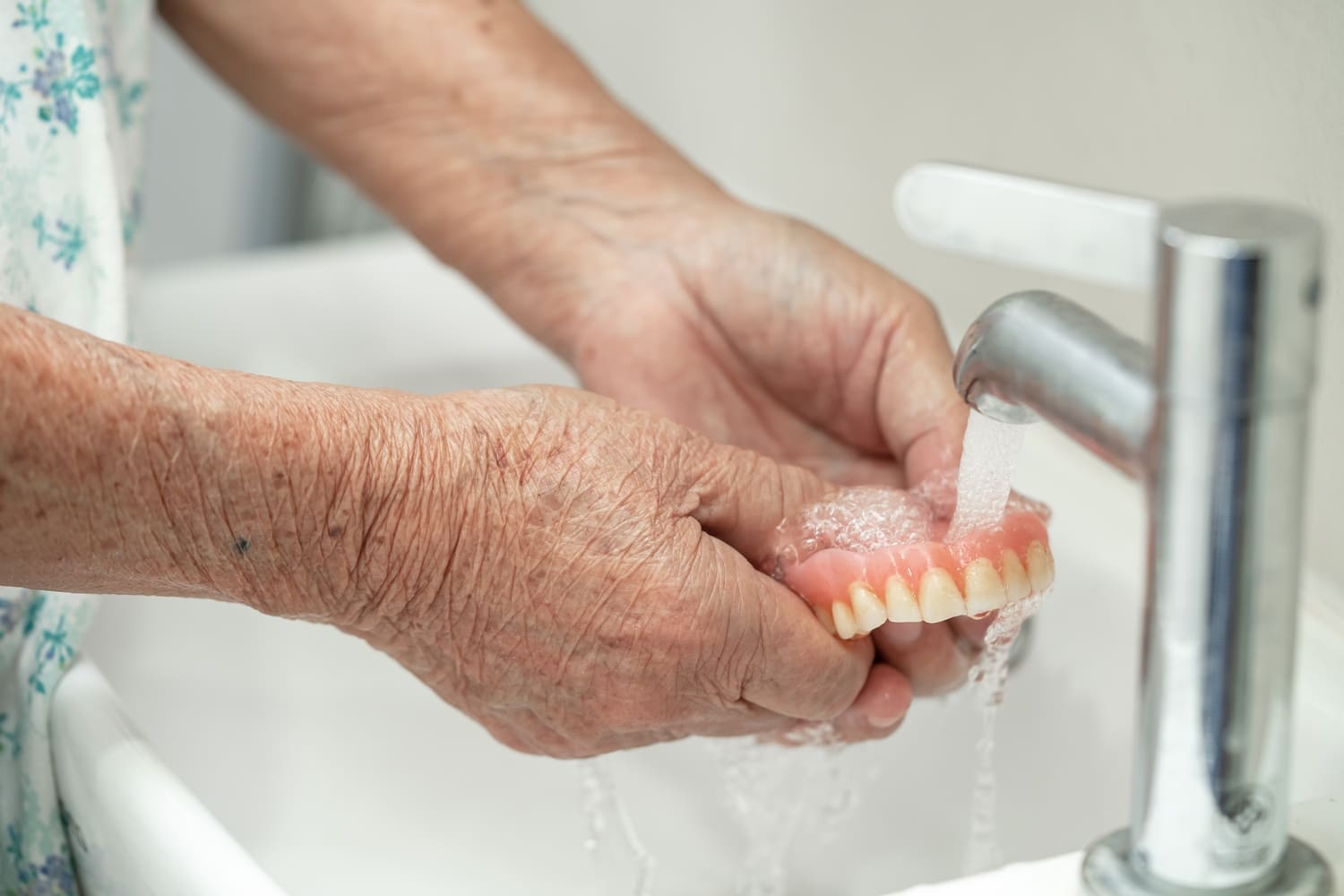
Learn how to care for your dentures with Saberton's complete guide. Daily routines, soaking tips, what to avoid, and when to see your denturist.

Get practical tips for chewing, talking, & eating with new dentures. Restore confidence & comfort with Saberton’s expert advice.

Discover how private insurance compares to Canada’s CDCP program for covering dentures. Find out what’s covered, eligibility, and book a FREE consultation today.

Discover how long getting dentures takes—from first visit, through fittings, to final fit. Saberton explains the denture timeline clearly and compassionately.

The right dentures, ones that actually fit your face, not just your mouth, can restore a surprising amount of facial support and confidence. Learn more by reading this post!

Wondering if Canada’s new dental program will help cover your dentures? You’re not alone. At Saberton, we get this question every day — and the answer is: yes, the Canadian Dental Care Plan (CDCP) does cover dentures. But, how much does it pay and who qualifies?

Implant-supported dentures offer better comfort, fit, and function than traditional options. Learn how they work, compare them to regular dentures, and discover if you’re a candidate.

Explore the best denture materials based on comfort, fit, durability, and cost. Compare acrylic, metal, and digitally made bases. plus composite and acrylic teeth. Get expert guidance from Saberton with free consultations and customized treatment plans.

Looking for affordable dentures in Ontario? Learn what to expect from cost-effective denture options, including fit, comfort, and maintenance. Discover financing, CDCP support, and expert care from licensed Saberton denturists.

Exciting news for Canadians! The Canadian Dental Care Plan (CDCP) is expanding its eligibility, making dental care more accessible to even more Canadians in need of affordable dental services.As of June 2025, all remaining eligible Canadians aged 18 to 64 will be able to apply for CDCP coverage. If you're looking for denture care or dental services and need financial assistance, now is the time to prepare.

The Canadian Dental Care Plan (CDCP) represents a landmark initiative in expanding access to essential dental services for up to 9 million Canadians. At Saberton, we specialize in guiding patients through the CDCP process, ensuring faster approvals, seamless paperwork, and high-quality dental care.

The holidays are upon us, and we are closing all clinics from Dec 24 to Jan 1, inclusive. Saberton will reopen on January 2, 2025!

We're thrilled to share some exciting news about Saberton’s continued growth and that is focused on delivering high quality denture care.

The CDCP coverage is based on pre-established treatment standards and patient income. Saberton helps patients understand these services and conditions clearly so they can plan accordingly and avoid unexpected charges.

The Canadian Dental Care Plan (CDCP) provides essential dental coverage for millions of Canadians. Learn how you can access these benefits with Saberton.

Explore the nuanced world of denture teeth quality with Saberton, where we delve into the balance between cost, aesthetics, and long-term health implications. From wear to digestive impacts, understand the vital aspects of choosing your denture.

We dive into the pivotal role of the denture base, contrasting traditional methods with modern approaches in denture creation. Committed to catering to unique patient needs, both financial and health-related, explore the difference with Saberton.

Discover the variances in denture quality with Saberton, exploring the distinctions between plastic and high-quality dental composite teeth. Learn how the material and crafting process impact durability, aesthetics, and functionality, especially considering factors like wear and staining.

Explore the innovative denture processes at Saberton, where we walk you through various denture types and dive into our modern, stain-resistant options. Our team will guide you through every step during a complimentary consultation, ensuring your journey to a new, confident smile is smooth and informed.

Embark on a journey to a secure, lasting smile with our friendly guide to dental implants. From understanding their functionality and exploring various types to navigating through concerns and costs, we've got your questions covered. Let’s dive in together, ensuring you're well-informed and prepared to take the next step towards a confident smile.

Learn how advancements in acrylic and composite resin technologies now offer aesthetically pleasing, durable, and healthier alternatives for denture wearers, ensuring smiles that can last for years while maintaining oral health.

New to dentures? Learn what to expect from your first consultation through final fit. Realistic timelines, tips for adjustment, and expert guidance from Saberton's licensed denturists.

Explore the journey from tooth extraction to denture placement with our insightful guide. Uncover three pivotal treatment plans, each with its unique advantages and challenges. We’ll walk you through the pros and cons of each path, aiding you on your journey to making an informed decision.

Saberton is a leading oral health care company located in Ontario's Golden Horseshoe, specializing in quality denture services.
.webp)
Saberton is a leading oral health care company located in Ontario's Golden Horseshoe, specializing in quality denture services.
.webp)
.webp)
© 2026 Saberton Denture & Implant. All rights reserved.
Opening Hours
- Monday-Friday8am-8pm
- Saturday8am-1pm
- SundayClosed