
Tired of Denture Adhesive? Exploring More Stable Options
Dental Implants


If You're Using Denture Adhesive Every Day, You Deserve Better
For a lot of denture wearers, adhesive has quietly become part of the morning routine. Squeeze a little into the denture, press it in, hope it holds through lunch. Maybe reapply before dinner, wipe the residue off at night and start again tomorrow. It doesn't feel like a crisis. It just feels like the way things are.
But here's something worth thinking about: that's not how it's supposed to feel. And in many cases, it doesn't have to feel that way at all.
It’s common to reach a point where questions start to come up around stability and ease. Maybe adhesive is being used more often than it used to be. Maybe there’s a bit more movement than expected. Or maybe there’s simply some curiosity about whether a different kind of stability is possible.
This guide is for the people who have accepted daily adhesive as their normal, and who might benefit from knowing that there are other paths available to them, starting with a free consultation at any Saberton Denture & Implant clinic.
What It's Actually Like to Use Denture Adhesive Every Day
Before anything else, it's worth naming the experience honestly, because not enough professionals in the industry do.
Denture adhesive is messy, expensive, and genuinely unpleasant to use. Because the mouth is an internal part of the body, the materials that can safely be used in an adhesive are limited. The result is a product that feels a lot like petroleum jelly: thick, greasy, and difficult to apply cleanly or remove completely. Most patients tolerate it because they feel they have no other choice.
And the cost adds up faster than most people expect! A single tube runs between $7 and $16. Depending on how much a patient uses, that expense can grow significantly over months and years. If someone is going through a tube of adhesive every week or two, they are likely spending more managing the problem than it would cost to actually address it.
Then there is the challenge of application itself. The areas where a denture has shifted or loosened are not always obvious, and placing adhesive in exactly the right spots requires a level of precision that most patients simply don't have. The result is a kind of guessing game: apply here, adjust there, try to get the denture to seat properly. If even one area is off, it can affect how the upper and lower dentures meet when biting. Over time, that kind of inconsistency can cause pressure in the wrong places, discomfort, and, in some cases, longer-term changes to how the bite functions.
This is not a small thing. These are real, daily frustrations that patients carry quietly, often because they've been told there's nothing more that can be done.
Why Denture Adhesive Becomes a Daily Habit
It's easy to assume that denture adhesive is something patients turn to as their mouth changes over time. And that is one reason. But it's not the only one, and it may not even be the most common one.
A significant number of people using adhesive every day are wearing dentures that never fit properly to begin with. This happens more often than it should. A patient will typically have extractions, heal, receive a denture, and notice right away that something is off. The fit isn't quite right or there's more movement than expected.
Most patients don’t ignore the problem, they ask about it. They bring it up with their dentist or denturist, and are often told that lower dentures naturally move, and that adapting over time is part of the process.So they follow the guidance they’re given, usually starting with adhesive to try and make things more manageable.
What often gets lost in that moment is that a poor fit is not always permanent. In many cases, a reline or adjustment can meaningfully improve stability and comfort. But if a patient has already been told nothing can be done, they're unlikely to seek a second opinion. They absorb the message, go home, and quietly start managing the problem themselves.
That is a deeply discouraging place to end up. A patient who came in with a real problem, asked the right questions, and walked out believing nothing could be done is not a patient who got full care. They got a conclusion without a proper look.
It’s one of the main reasons Saberton Denture & Implant offers free consultations. Not as a formality. But because a patient who has been told there is nothing left to do still deserves to have someone sit down, take a proper look, and give them a real answer, without any pressure or obligation to proceed.
It’s also important to remember that dentures are designed to fit the shape of the mouth at a specific point in time. But the mouth does not stay the same. After teeth are removed, the jawbone and gums gradually reshape. This is a natural process, and it happens whether someone wears dentures or not. Over time, those changes can affect how a denture sits.
At first, the change is subtle. A small shift here or there. Then a gradual increase in movement. Denture adhesive can help compensate for that and restore a sense of stability. For many patients, that works well. But it is also the point where some begin to wonder if stability can be improved more directly, rather than managed day to day.
The Real Cost of Managing Instead of Addressing the Problem
There's a broader pattern worth naming here. When a patient chooses adhesive over a professional assessment, it usually isn't because they want to. It's because they've concluded that it's cheaper, simpler, or easier to manage themselves.
In many cases, that conclusion is based on incomplete information.
Annual free consultations at Saberton Denture & Implant exist specifically to catch the kind of gradual fit changes that, addressed early, can prevent a patient from reaching the daily-adhesive stage in the first place. Most patients who end up relying on adhesive long-term simply were not told this was an option.
Starting With the Simplest Option: Fit
Many patients who have been living with adhesive for years have already had this thought:
"I asked about getting it adjusted. They said there wasn't much they could do."
That experience is more common than it should be. And in many cases, it is not accurate.
As the gums and bone change over time, a denture that once fit well will gradually lose contact with the tissue supporting it. That gap is exactly what a reline or adjustment is designed to address. This is not a complex procedure. It’s a one-time appointment that reshapes the base of the denture to match the current contours of the mouth.
For patients whose dentures fit well at one point but have gradually loosened, this is often the most straightforward path back to comfort. It will not solve every situation. Lower dentures in particular can be affected by tongue movement and anatomy in ways a reline alone cannot fully resolve. But for many patients, it is the step that should have been offered earlier and was not.
That is where a free consultation at Saberton Denture & Implant starts. Not with a sales conversation about the next level of treatment. With a proper look at what is actually going on.
When It's More Than a Fit Issue
There are situations where the changes in the mouth are more significant, and adjustments alone do not fully restore the fit. In those cases, a new denture designed around your current anatomy can improve both comfort and function.
That's where the conversation around implant-supported options tends to begin, and it tends to begin more gently than most people expect. At Saberton Denture & Implant, these options are often introduced using straightforward labels:
- DOI (Dentures on Implants): A removable denture that snaps onto two or more implants in the jaw. It comes out for cleaning, but during the day it connects to a stable anchor rather than resting on the gums alone. For patients who are tired of movement and adhesive but want a solution that's still familiar and removable, this is often the first option explored.
- FOI (Fixed on Implants): A non-removable solution supported by multiple implants. It stays in place the way natural teeth do. No adhesive. No daily removal. The closest thing to what patients had before tooth loss.
Neither option is right for everyone. But both are worth understanding, and both are worth asking about, especially because two implants supporting a lower denture are recognized as the minimum standard of care. If you're wearing a lower complete denture today without any implant support, that context may be worth discussing with a denturist.
How Do You Know Which Option Is Right for You?
There is no single answer that fits every situation, and the right path depends on where you are right now: how long you have been wearing dentures, how much has changed in your mouth, what stability actually means to you day to day, and what feels realistic given your circumstances.
That is not a decision you need to make before walking in the door.
It can be helpful to think of denture solutions as a range rather than a single decision. At one end, traditional dentures continue to work well for many patients. From there, adjustments and new dentures can help maintain fit over time. And beyond that, implants can be introduced to increase stability, either with removable or fixed designs.
Each step builds on the previous one. There’s no requirement to move from one to the next, only the option to do so if it aligns with what the patient is looking for. That’s why Saberton’s approach starts with education, not decisions.
Patients begin with a free initial discussion, where they can share their experience with dentures, ask questions about adhesive, fit, and alternatives. From there, a denturist can guide next steps based on what matters most to you.
For a fuller picture of how implant-supported options fit into the broader decision, the Dental Implants in Ontario guide is the perfect starting point.
What About Cost and Coverage?
Cost is often one of the biggest concerns, and understandably so.
It’s helpful to separate two things here, because they’re often grouped together but treated differently when it comes to coverage:
Denture-related treatments, including partial dentures, full dentures and, in some cases, overdentures (dentures supported by implants), may be eligible for coverage under the Canadian Dental Care Plan (CDCP), depending on your individual situation and pre-authorization.
Dental implants themselves, however, are generally not covered under CDCP. This includes the surgical placement completed by the implant surgeon.
What this means in practice is that some parts of treatment may be covered, while others are not.
For patients exploring options beyond traditional dentures, cost doesn’t always need to be approached all at once. At Saberton Denture & Implant, flexible payment options are available to help spread treatment costs over time, depending on the plan and the patient’s needs.
The goal is to make sure patients can look at their options clearly, without having to make decisions based on assumptions or incomplete information.
Because every case is different, the most accurate way to understand coverage, co-pays, and payment options is through a consultation. Everything is explained upfront, so there are no surprises.
You Don't Have to Keep Managing This Alone
If denture adhesive has become part of your daily routine, you're not doing anything wrong. You found a way to cope with something uncomfortable, and you've been getting on with your life. But coping and thriving aren't the same thing. And if part of you has wondered whether something better is possible, it probably is.
At Saberton Denture & Implant, the first step isn’t a procedure, just a free initial consultation. Whether you’re curious about improving your current dentures or exploring implant-supported options, the goal is the same:
Help you feel informed, supported, and confident in whatever you choose.
Have questions? Fill out the form below to tell us how we can help!
Related Posts

Loose dentures usually mean bone changes, not something you did wrong. Learn why fit shifts and what actually helps.

Worn dentures for years and wondering if it's too late for dental implants? Learn what's possible with a free initial discussion.

Are implant-supported dentures removable? Saberton Denture & Implant explains what's true for each option, and what daily care actually looks like.

Three ways Saberton Denture & Implant secures teeth to implants, explained in plain English before your free initial discussion.

Snap-in dentures clip onto implants for stable, no-slip wear; traditional dentures rely on suction. See the difference and book a free consultation.

Thinking about dental implants after extractions? Learn what's possible, when to start, and how timing affects your options.

Facing tooth extractions? Learn how to think through the implants vs dentures decision before you commit, with calm, pressure-free guidance from Saberton.

After full tooth extractions, many people rush their next step. Learn the most common mistake, and how thoughtful denture planning can protect comfort and options.

Wondering if dental implants are still an option after full tooth removal? Learn how full-mouth implants work, timelines, and what to expect.

Learn how the timing of dentures after tooth extractions can affect comfort, healing, and future implant options. A clear, pressure-free guide.

Had teeth removed and unsure what comes next? Learn what to consider before choosing dentures, from healing time to long-term comfort.

Discover how digital dentures work, their benefits, process, costs and whether they’re right for your unique needs.

Learn how well-fitted dentures improve digestion, nutrition and overall health beyond your smile.

Lost teeth early? Discover why younger adults wear dentures, how to navigate this stage, and get confident with support from Saberton.

Starting with new dentures? Learn what to eat during your first few weeks, with specific guidance for complete and partial dentures. Tips for easier eating, foods to avoid, and how to adjust comfortably.

Explore dental implant options with clear, pressure-free guidance. Learn about implants, dentures on implants, costs, and CDCP coverage at Saberton.

Experiencing sore spots when eating with your dentures? Learn why it happens and how to fix it.

Discover the hidden risks of wearing your dentures overnight, and how removing them can protect your smile and health.
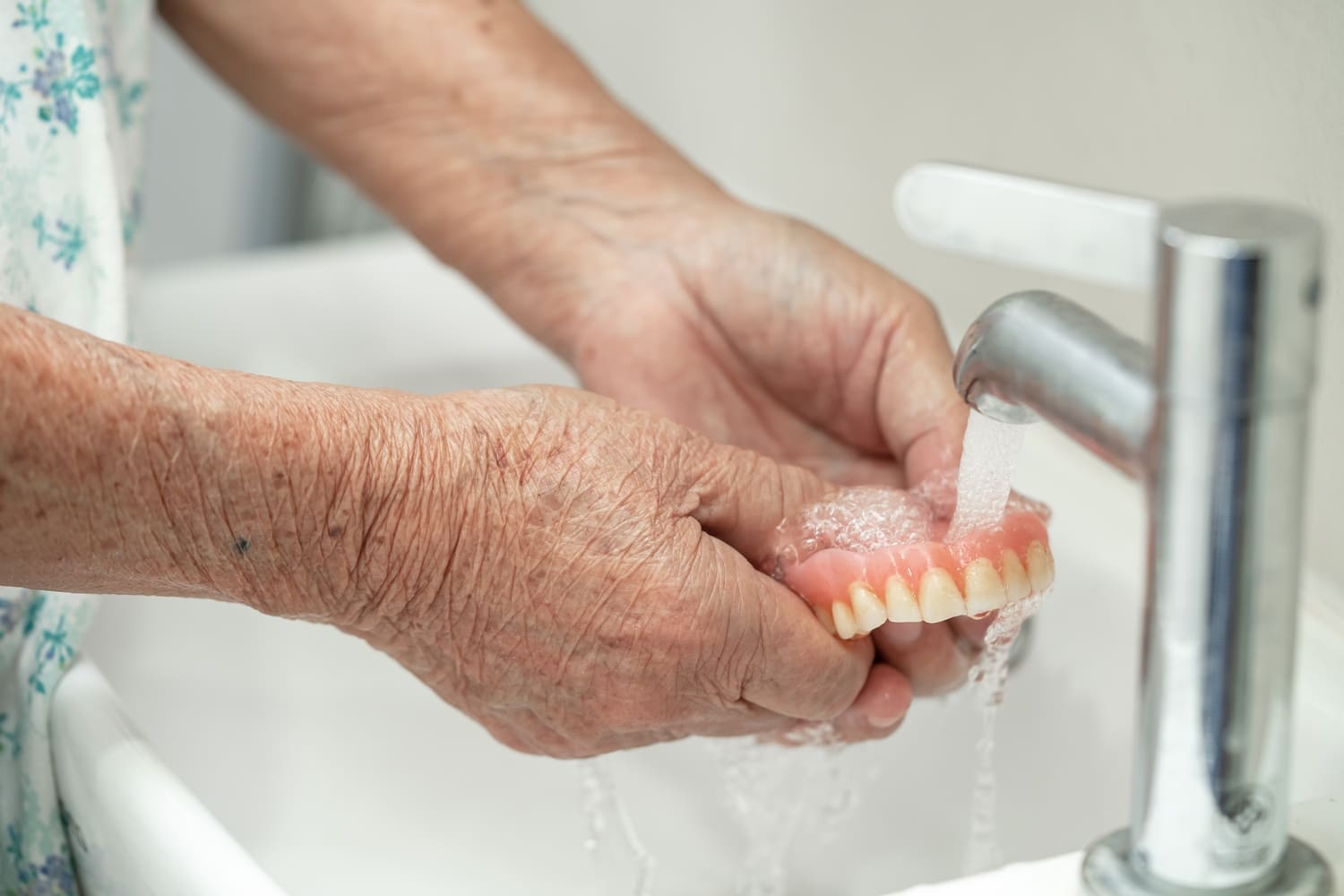
Learn how to care for your dentures with Saberton's complete guide. Daily routines, soaking tips, what to avoid, and when to see your denturist.

Get practical tips for chewing, talking, & eating with new dentures. Restore confidence & comfort with Saberton’s expert advice.

Discover how private insurance compares to Canada’s CDCP program for covering dentures. Find out what’s covered, eligibility, and book a FREE consultation today.

Discover how long getting dentures takes—from first visit, through fittings, to final fit. Saberton explains the denture timeline clearly and compassionately.

The right dentures, ones that actually fit your face, not just your mouth, can restore a surprising amount of facial support and confidence. Learn more by reading this post!

Wondering if Canada’s new dental program will help cover your dentures? You’re not alone. At Saberton, we get this question every day — and the answer is: yes, the Canadian Dental Care Plan (CDCP) does cover dentures. But, how much does it pay and who qualifies?

Implant-supported dentures offer better comfort, fit, and function than traditional options. Learn how they work, compare them to regular dentures, and discover if you’re a candidate.

Explore the best denture materials based on comfort, fit, durability, and cost. Compare acrylic, metal, and digitally made bases. plus composite and acrylic teeth. Get expert guidance from Saberton with free consultations and customized treatment plans.

Looking for affordable dentures in Ontario? Learn what to expect from cost-effective denture options, including fit, comfort, and maintenance. Discover financing, CDCP support, and expert care from licensed Saberton denturists.

Exciting news for Canadians! The Canadian Dental Care Plan (CDCP) is expanding its eligibility, making dental care more accessible to even more Canadians in need of affordable dental services.As of June 2025, all remaining eligible Canadians aged 18 to 64 will be able to apply for CDCP coverage. If you're looking for denture care or dental services and need financial assistance, now is the time to prepare.

The Canadian Dental Care Plan (CDCP) represents a landmark initiative in expanding access to essential dental services for up to 9 million Canadians. At Saberton, we specialize in guiding patients through the CDCP process, ensuring faster approvals, seamless paperwork, and high-quality dental care.

The holidays are upon us, and we are closing all clinics from Dec 24 to Jan 1, inclusive. Saberton will reopen on January 2, 2025!

We're thrilled to share some exciting news about Saberton’s continued growth and that is focused on delivering high quality denture care.

The CDCP coverage is based on pre-established treatment standards and patient income. Saberton helps patients understand these services and conditions clearly so they can plan accordingly and avoid unexpected charges.

The Canadian Dental Care Plan (CDCP) provides essential dental coverage for millions of Canadians. Learn how you can access these benefits with Saberton.

Explore the nuanced world of denture teeth quality with Saberton, where we delve into the balance between cost, aesthetics, and long-term health implications. From wear to digestive impacts, understand the vital aspects of choosing your denture.

We dive into the pivotal role of the denture base, contrasting traditional methods with modern approaches in denture creation. Committed to catering to unique patient needs, both financial and health-related, explore the difference with Saberton.

Discover the variances in denture quality with Saberton, exploring the distinctions between plastic and high-quality dental composite teeth. Learn how the material and crafting process impact durability, aesthetics, and functionality, especially considering factors like wear and staining.

Explore the innovative denture processes at Saberton, where we walk you through various denture types and dive into our modern, stain-resistant options. Our team will guide you through every step during a complimentary consultation, ensuring your journey to a new, confident smile is smooth and informed.

Embark on a journey to a secure, lasting smile with our friendly guide to dental implants. From understanding their functionality and exploring various types to navigating through concerns and costs, we've got your questions covered. Let’s dive in together, ensuring you're well-informed and prepared to take the next step towards a confident smile.

Learn how advancements in acrylic and composite resin technologies now offer aesthetically pleasing, durable, and healthier alternatives for denture wearers, ensuring smiles that can last for years while maintaining oral health.

New to dentures? Learn what to expect from your first consultation through final fit. Realistic timelines, tips for adjustment, and expert guidance from Saberton's licensed denturists.

Explore the journey from tooth extraction to denture placement with our insightful guide. Uncover three pivotal treatment plans, each with its unique advantages and challenges. We’ll walk you through the pros and cons of each path, aiding you on your journey to making an informed decision.

Saberton is a leading oral health care company located in Ontario's Golden Horseshoe, specializing in quality denture services.
.webp)
Saberton is a leading oral health care company located in Ontario's Golden Horseshoe, specializing in quality denture services.
.webp)
.webp)
© 2026 Saberton Denture & Implant. All rights reserved.